
Most clients ask for “multi-camera” because they’ve seen it in an explainer video and assumed it’s a quality signal. It is — sometimes. It’s also dead weight on a budget when the subject doesn’t need it, the edit doesn’t use it, and the setup time eats into your shoot day.
After 13 years of interview shoots across Bangkok and the region, I’ve run every configuration: locked-off single camera, sliding 2-cam, full 4-cam keynote rigs for UN forums with audiences of 500. The right answer depends on three things — and none of them are “what looks impressive in a quote.”
Here’s how to choose.
The real question: how many camera angles will the edit actually use?
A camera you don’t cut to in the final piece is a camera that cost you setup time, operator fee, media wrangling, and color-matching headaches in post. For nothing.
So before you talk about cameras, talk about the edit. Where will the cuts happen? Why? And what does the second angle do for the story that the first one didn’t?
Three real answers to that question, in increasing order of need:
Single-camera: when stillness is the point
One camera, locked off, eye-level, soft framing. The subject talks. You cut to B-roll for transitions, never to a second angle on them. This works for:
- Founder stories under 2 minutes where the subject’s stillness is part of the gravitas
- Testimonials where you want intimacy — a second angle pulls the viewer out of the moment
- Documentary-style subjects who are already comfortable on camera
What it costs you: nothing. It’s the cheapest, fastest, and often the most emotionally honest configuration. The reason most agencies upsell you off it is that single-camera looks “simple” in their portfolio — not because it serves the story better.
The flagship piece I shot for Garnier Thailand uses primarily single-angle interview cuts. Not because we couldn’t afford more cameras — because more cameras would have ruined it.
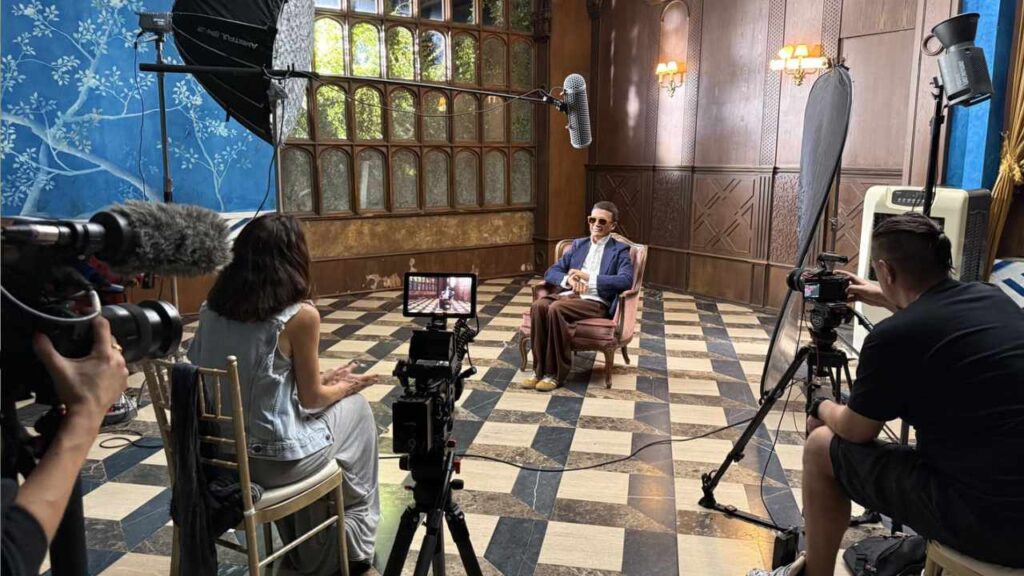
Two-camera: the sweet spot for 80% of corporate interviews
A-cam locked wide (head and shoulders, slightly off-center). B-cam tighter (chest up, profile or 30-degree angle). Both recording the entire take. This unlocks three things you can’t do with one camera:
- Cut for pace. You can tighten a long answer by cutting from A-cam to B-cam at the edit point, hiding the seam.
- Cut around verbal stumbles. “Um, sorry, let me start that again” disappears with a B-cam cutaway. The subject sounds polished.
- Add visual texture. Wide and tight create rhythm. The viewer’s eye doesn’t get bored.
This is the configuration I use for almost every corporate, NGO, and brand interview unless there’s a specific reason to escalate. The cost premium over single-camera is meaningful but not crazy — one extra operator, one extra body of gear. The edit savings (you spend less time hiding flubs) usually balance it out.
If a Bangkok production company is quoting you anything above single-camera and not telling you why, ask: “Will I see the second angle in the cut? If yes, where?” If they can’t answer, you’re paying for theater.
Three- and four-camera: when the room is the point
Three cameras: A-cam wide, B-cam tight, C-cam profile or audience POV. Four cameras: add an audience reverse, a wide master, or a roaming handheld.
These setups exist for one reason: when the interview happens in a room with people, motion, or context that’s part of the story. Examples from past work:
- A UN forum keynote with a 200-person audience — you need cuts to audience reactions
- A founder talking through their factory floor — the wide camera captures context the close-up can’t
- A dual-subject interview (interviewer + interviewee both on camera) — minimum two close-ups plus a wide
Outside these specific cases, more cameras don’t add quality. They add cost and complexity. Each additional camera multiplies sync time in post, color-grading work, and the chance of a continuity error that the editor has to hide.
Four cameras is rarely needed. When I’m hired for it, it’s usually because the client has been told four cameras = premium. That’s wrong. Four cameras = a specific shoot type. If your shoot isn’t that type, you’re burning budget on operators standing around.

What this looks like in a Bangkok quote
A realistic ballpark for the Bangkok market, just for the camera side (excluding lighting, sound, location, post):
- Single-camera interview, half-day: light setup, one operator, FX6 + cinema lens. Affordable for most brand budgets.
- Two-camera interview, full day: two operators, two bodies, matched lenses, multi-cam color workflow. The right call for serious corporate, founder, and NGO work.
- Three-camera interview, full day: add a third body + operator, plus more rigging time. Usually a half-day extra in setup.
- Four+ camera with audience or live event: different beast. Quote it as event coverage, not interview.
If you want a precise figure, our interview video production page in Bangkok lists the work we cover and you can ask for a tailored quote.
What to check before signing off on a multi-camera quote
- Will the edit use all the angles? Get a yes with reasoning, not just a yes.
- Are the cameras matched (same sensor, same color profile)? Mixed cameras in one interview means hours of grading time and never quite the same result.
- Is the sound built for multi-camera? Each angle needs its own audio scratch track for sync. Read why sound matters in video interviews — this is the part most quotes ignore.
- Is the lighting designed for the angles you’re shooting? Three-point lighting set up for one angle often falls apart on the second. See interview lighting setup for what to look for.
The honest summary
Two-camera is the right answer for most Bangkok corporate interviews. Single-camera is the right answer when stillness is the story. Three or four cameras is the right answer when the room is the story.
If your production company can’t tell you which one applies to your shoot — or quotes you four cameras as a default — they’re not thinking about your story. They’re thinking about their invoice.
13 years of interview work taught me to start with the cut and work backward. The cut tells you how many cameras you need. The rest is logistics.
— Sergiy Pudich, EasyLiving Films
