Why Most Corporate Interviews Feel Stiff — And How to Fix It


The problem nobody owns on set
You’ve seen it. The CEO in front of the bookshelf, hands folded too neatly. The HR director reading off-script while staring three inches above the lens. The startup founder who sounds like a press release with a voice.
Everyone knows the look. Nobody talks about why it happens.
It’s not the lighting. It’s not the lens. It’s not even the script. It’s that no one in the room is directing the person on camera.
In 13 years of filming interviews — UN agencies, NGOs, brands, indie founders, Guinness World Records — I’ve watched hundreds of subjects walk in nervous, leave proud, and deliver footage I could cut into something cinematic. What changes between the stiff first take and the usable one isn’t gear. It’s the human in front of the subject.


The problem nobody owns on set
Most corporate video shoots are organized like product shoots. Producer handles logistics. DP handles image. Sound op handles audio. Marketing client handles message.
Nobody handles the performance.
The interviewee shows up cold, gets miked in three minutes, sits in a chair already lit, and is told “we’ll start when you’re ready.” Then someone says “look at me” and presses record. The subject is now expected to be articulate, warm, on-message, and visually engaging — without anyone helping them get there.
That’s not an interview. That’s an ambush.


What “directing” an interview actually looks like
Directing a non-actor on camera is a craft that almost nobody outside the documentary world bothers to learn. It’s not about giving line readings. It’s about doing three things, in this order, every single time:
1. Lower their stakes. Before any question, talk about something they’re confident about that isn’t the topic. What they had for breakfast. Their commute. Where they’re from. Watch their shoulders. When the shoulders drop, you can start.
2. Ask the question they think you’re asking — then ask the real one. The first version of any answer is the “press release” version. Let them say it. Don’t react. Then ask: “That’s the answer you’d give a journalist. What would you say to your team?” The second answer is the one you use.
3. Stay in their eye line. Not the lens. Tell them to talk to you, not the camera. Sit just beside the lens, at eye level. Nod with intention. Don’t smile too much — it cues them to perform. Just be a calm human across from them.
That’s directing. Three moves. It changes everything you see in the cut.


Why your in-house producer can’t do this (without practice)
This isn’t about hiring more expensive crew. It’s that the person in the room responsible for performance needs to be someone who’s only thinking about performance. Not someone also running a slate, checking back focus, or coordinating the next location.
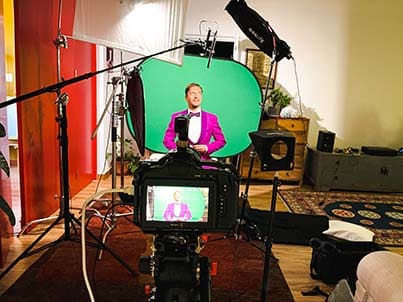
On our interview video production shoots in Bangkok, my only job for the first twenty minutes is the subject. I haven’t framed the shot yet — my AC does that. I haven’t checked levels — the sound op handles it. I’m building rapport. Once the subject is at ease, I switch back to direction. By then they’ve forgotten the camera is there.
That’s not a personality trick. That’s a workflow choice. Most production companies don’t make it because nobody’s billing for “subject prep” as a line item.


What this looks like in your cut
When subjects are directed well, you get:
- Eye contact that lands on the lens, not five feet above it
- Pauses that read as thoughtful, not nervous
- Hands that move with the words, not in their lap
- Answers that finish — not trail off with “and stuff like that”
- Genuine micro-expressions: a half-laugh, a sigh, a look down. The stuff editors build emotion on
When subjects aren’t directed:
- Stiff posture even on takes 8 and 9
- Verbal tics: “essentially”, “at the end of the day”, “moving forward”
- Eye contact that drifts
- The wrong half of every answer is the usable half — and you only realize it in the edit
You can’t fix performance in post. Color grading doesn’t unstick a CEO. The decision is made in the first five minutes of the shoot.

The brutal version
If your last corporate video felt like a press release, blame the director — not the camera. If you don’t know who the director was on that shoot, that’s your answer.
The fix is cheap. You don’t need a 60-megapixel sensor or a 35mm prime. You need someone in the room whose job it is to make your subject feel safe enough to be honest. That’s it. Everything cinematic flows from that.
If you’re planning an interview video in Bangkok and want to make sure it doesn’t end up in the “looks corporate” pile, that’s the kind of work I do. 13 years of it. Brands like Garnier, UN agencies, NGOs, founders who came in nervous and left proud of what we made together.
The gear matters second. The lighting matters second. The director-subject relationship matters first.
— Sergiy Pudich, EasyLiving Films
