Why Properly Recorded Sound Matters in Professional Video Interviews


(Guidance for Clients — EasyLiving Films, Bangkok)
When clients search for professional video interviews in Bangkok or high-quality interview filming in Thailand, they usually imagine beautiful lighting, cinematic framing, and a confident on-camera speaker. But one element defines whether the final video feels premium or amateur: sound.
Great visuals attract attention — but great sound holds it.
And in interviews, sound is 50% of the entire experience.
Many companies try to reduce budgets by asking camera operators to “just handle the audio too.” But in real production, this is one of the most common reasons interview videos fail.
Why Camera Operators Should NOT Record Sound
Your camera team already concentrates on:
– Composition and framing
– Camera movement
– Exposure and focus
– Lighting consistency
– Talent eye-line and performance
– Monitoring technical settings
– Managing batteries, media, and rigging
Adding sound responsibilities on top of that means splitting their attention — and in interviews, losing focus for even 2–3 seconds can ruin the entire take.
Camera operators care deeply about visuals. That is their expertise.
But properly capturing interview audio is a separate profession requiring full attention, trained ears, and dedicated equipment.
Why Professional Sound Makes a Massive Difference
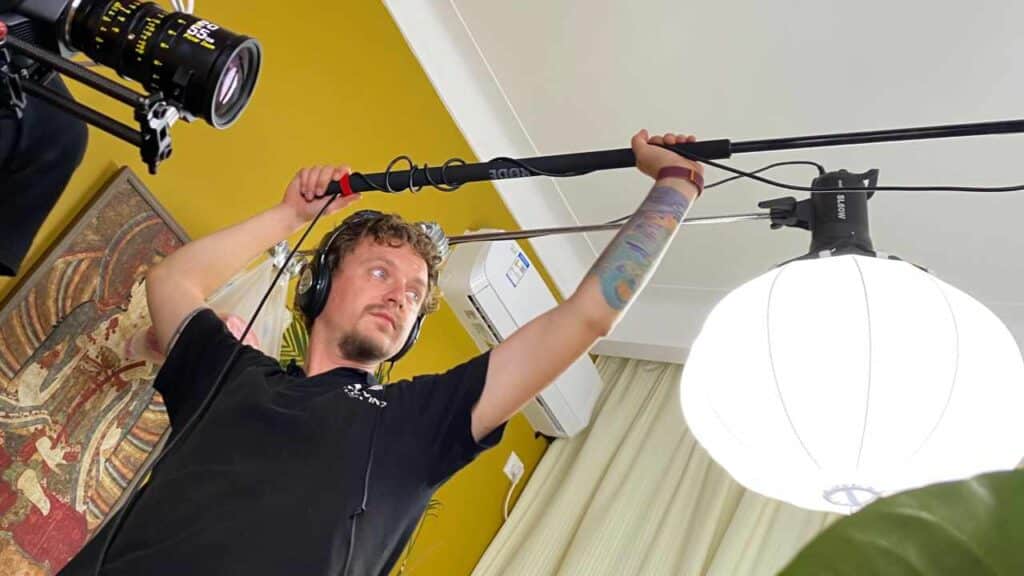
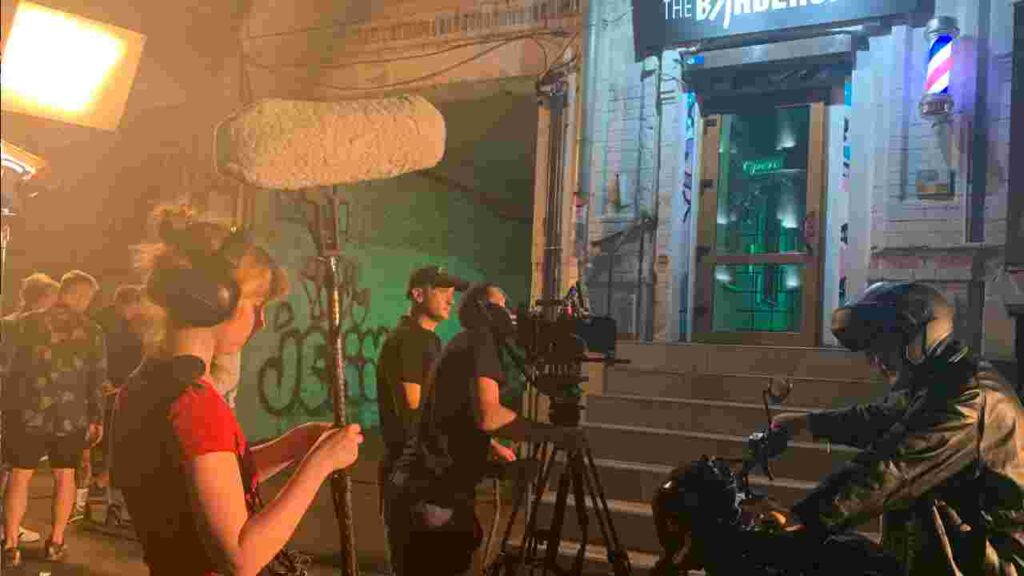
A trained production sound recordist ensures:
– Correct microphone placement (boom + wireless lav)
– Clean gain levels without distortion
– Constant monitoring of noise, rustle, wind, AC hum
– Backup recordings in case of wireless dropouts
– Immediate troubleshooting during the take
– Professional mixers and recorders for clean, rich dialogue
No on-camera mic — and no multitasking camera operator — can deliver this level of quality.
When filming corporate interviews, documentary interviews, or CEO speeches in Bangkok or anywhere in Thailand, proper sound is what makes the message trustworthy, human, and engaging.
The “Fix it in Post” Myth
Post-production tools can clean small issues.
But distant, noisy, distorted, or rustling dialogue usually cannot be fixed.
Bad audio means:
– Expensive re-shoots
– Awkward ADR (re-recording voices later)
– Unusable footage
– A frustrated client
That’s why hiring a professional sound recordist isn’t just a technical choice — it’s a smart business decision.
Why You Should Budget for a Dedicated Sound Recordist
At EasyLiving Films, we always recommend a trained sound person for any professional interview shoot in Bangkok or Thailand. This guarantees:
– Broadcast-level audio
– Faster shooting with fewer interruptions
– Smooth collaboration with the camera department
– Reliable backups
– A polished final video that represents your brand properly
It’s one of the best investments for high-quality interview production.
FAQ — Sound on Interview Shoots in Bangkok
Why is quality sound so important for interviews?
Because interviews rely entirely on clear dialogue. If viewers can’t hear the message, the video loses impact immediately.Can the camera operator handle audio?
Technically yes, professionally no. They cannot monitor audio properly while managing the camera.Is sound really 50% of the final interview quality?
Yes — viewers instantly notice bad audio. It affects professionalism more than visuals.Why can’t we just use the mic on the camera?
It’s too far from the speaker and picks up room echo, traffic, and background noise instead of the voice.What does a sound recordist do during an interview shoot?
Monitors levels, places microphones, controls noise, and ensures every take is clean and safe.Is it worth paying extra for a sound person?
Absolutely. It prevents unusable footage, reshoots, and expensive post-production fixes.Can’t we clean bad audio later in editing?
Only minor issues. Badly recorded dialogue cannot be saved.What equipment does a professional sound recordist bring?
Lav mics, boom microphones, wind protection, wireless systems, audio mixers, and recorders with backup tracks.Do interview videos in Bangkok have special sound challenges?
Yes — air-conditioning, traffic, humidity, echoey rooms, and BTS trains all require expert handling.Which types of projects should always hire a sound recordist?
Corporate interviews, documentary interviews, testimonials, CEO messages, brand content, and any project where the spoken message matters.
Related on interviews
- Professional interview video production in Bangkok — our flagship service
- Why corporate interviews feel stiff — directing non-actors
- Interview lighting setup — three-point lighting for interviews
- How to prepare for a video interview — pre-shoot checklist
- Makeup for video interview — on-camera prep
Related: Multi-camera interview setup in Bangkok — when it is worth the cost
